







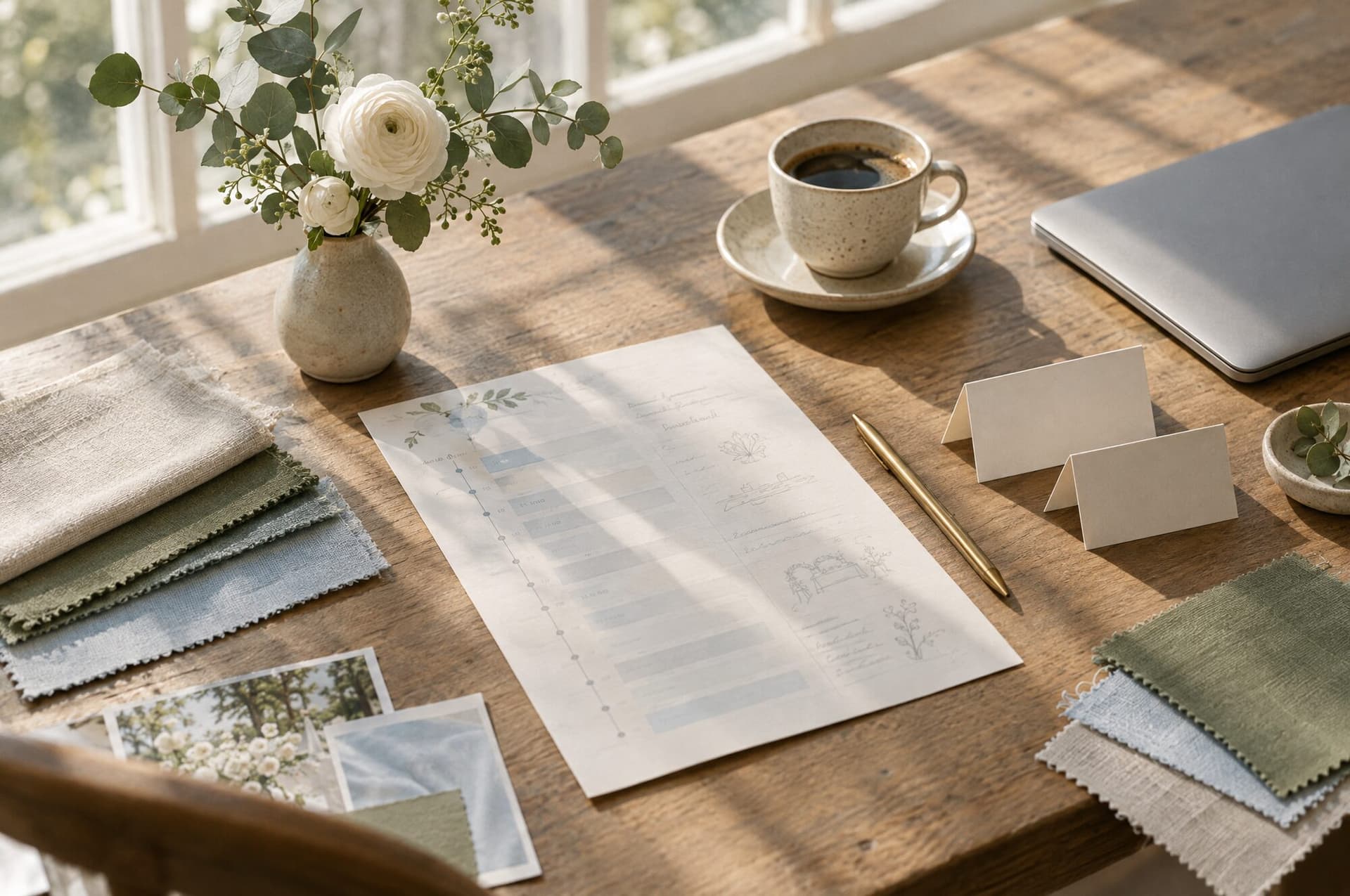
On the day of an event, the run of show is the only document that matters. When it is clear and current, vendors arrive on time, speeches start when they should and the client sees none of the effort. When it is out of date, everyone works from a different version and the day unravels in small ways.
Work backwards from the moments that matter
Start with the fixed points: the ceremony, the keynote, the dinner service. Then work backwards, adding what has to happen before each one and how long it really takes. A schedule built from the key moments outwards is far more realistic than one built from the morning forwards.
Add buffers where things go wrong
Most events run late in the same places: transport, speeches and food service. Build short buffers around them, and protect the items that cannot move. A schedule with a little slack looks relaxed on paper and is the reason the evening still ends on time.
- Give every item a start time, an end time and one owner
- Note the location and the people involved
- Mark dependencies, such as the florist before the photographer
- Keep a short list of what can be cut if the day runs behind
Show each person only what they need
A caterer does not need the speech order and the band does not need the dessert plan. Filtered views keep the document short enough that people actually read it, and they reduce the number of questions you answer on the day.
A timeline nobody reads is just a nice document.
Change it once, in one place
Changes are inevitable. What causes trouble is changing the schedule in one place and forgetting to tell everyone. When the timeline is a single shared record, a new time appears for every person with access, and you stop sending revised PDFs.
Rehearse it out loud
Before the event, walk the day with the client and the main vendors, out loud. The gaps, such as who unlocks the room or where the delivery enters, appear in the conversation long before they appear on site.
A run of show everyone can trust is current, short for each reader and kept in one place. Build it that way and the day mostly runs itself.